There is a famous saying in the Italian Gelato world:
“A great flavor can be created from good ingredients, but a perfect Gelato can only be achieved through a well-balanced recipe.”
Many people who are new to making Gelato often believe that using high-quality ingredients and following the instructions carefully is enough to create a delicious final product. However, after producing a few batches, they often begin to encounter familiar problems:
Gelato becomes too hard after overnight storage.
Gelato melts too quickly when displayed.
Tiny ice crystals appear.
The surface becomes dry and prone to cracking.
The flavor lacks harmony, even when premium ingredients are used.
The quality varies from one batch to another.
What is important to understand is that these problems are rarely caused by the ingredients themselves. In most cases, they result from an improperly balanced recipe.
In the professional Gelato world, Gelato Formula Balancing is considered the “heart” of the entire production process. It is the key step that determines whether Gelato achieves the smoothness, elasticity, stability, shape retention, and authentic Italian flavor that professionals strive for.
In this article, IKEM will help you understand the principles of Gelato recipe balancing and share the approach used by many Gelato artisans around the world to create consistently high-quality Gelato, batch after batch.
Unlike traditional ice cream, Gelato generally contains less fat while requiring a smoother and softer texture. Therefore, every ingredient in a Gelato recipe must be carefully calculated and precisely balanced.
Recipe balancing is not simply about weighing the correct number of grams of each ingredient. It is the process of controlling the relationship between:
Water content
Fat content
Different types of sugars
Milk proteins
Total solids
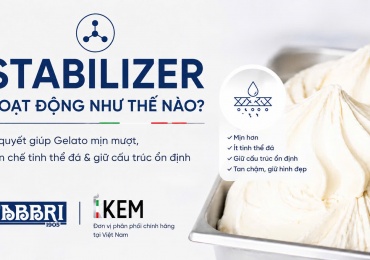
Stabilizers
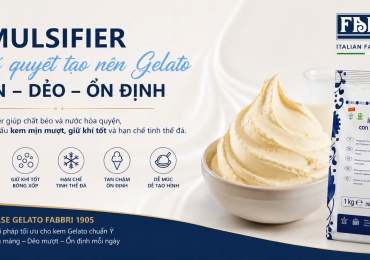
Emulsifiers
PAC (Anti-Freezing Power)
POD (Sweetness Power)
When all of these factors are properly balanced, Gelato can achieve:
✅ A smooth and creamy texture
✅ Fewer ice crystals
✅ Easy scooping
✅ A slow and pleasant melt in the mouth
✅ A rich and well-rounded flavor
✅ Excellent structure and stability in the display case
Mục lục
Many people compare making Gelato to cooking. In reality, Gelato making is much closer to food science than to conventional cooking.
Each ingredient does more than simply contribute flavor—it also has a direct impact on the structure and texture of the final product.
For example:
Adding 20 g of sugar can make Gelato softer.
Adding 20 g of water can increase the risk of ice crystal formation.
Reducing the fat content can make fruit flavors more pronounced, but may also cause the Gelato to melt faster.
Increasing total solids can improve smoothness and body, but too much can make the Gelato feel heavy on the palate.
That is why a Gelato artisan is not simply someone who mixes ingredients. They are also a “balancer” who carefully controls every element of the recipe to achieve the desired texture, stability, sweetness, and flavor.
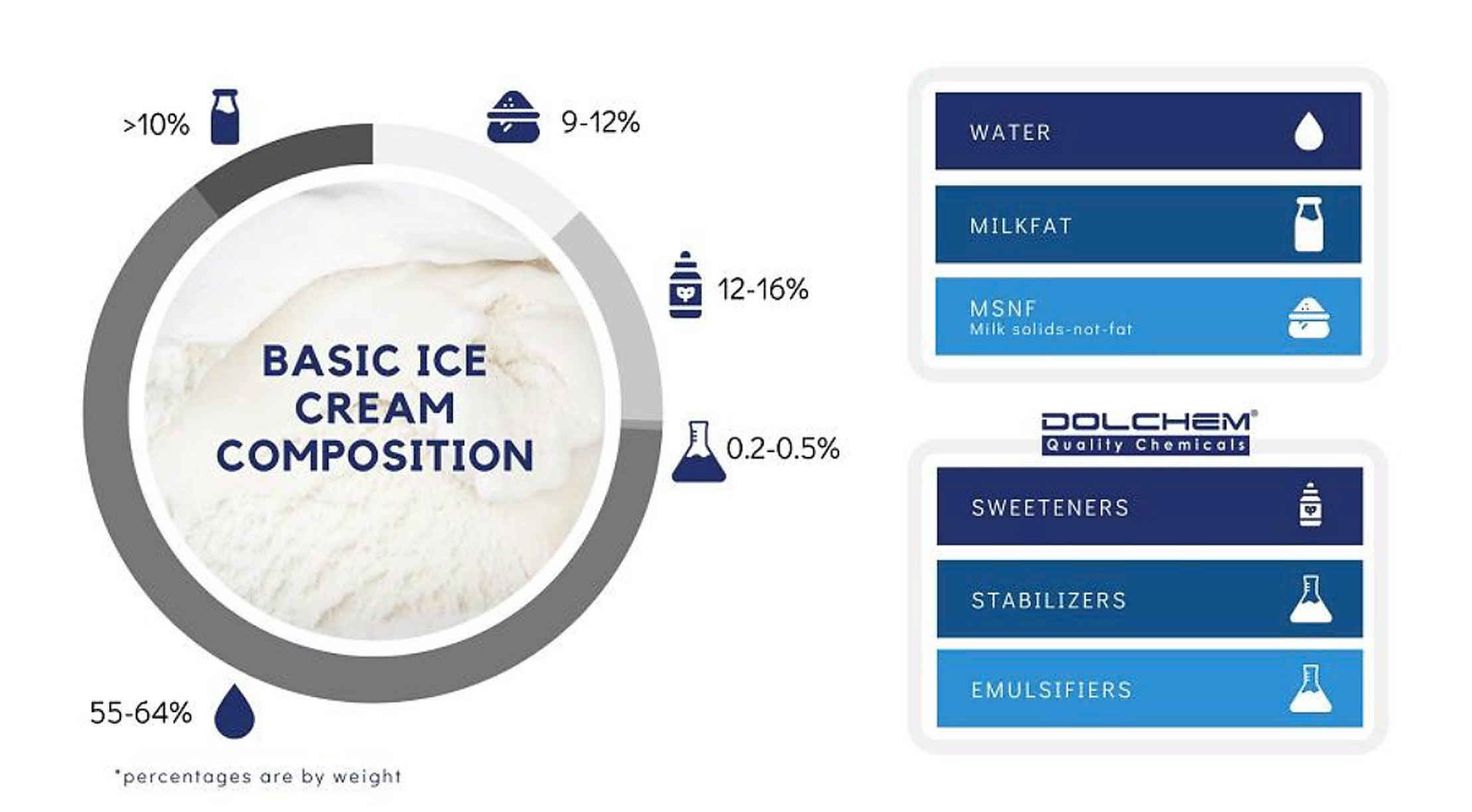
Water is the largest component in most Gelato recipes, but it is also one of the factors that can cause the most problems if it is not properly controlled.
Water typically accounts for more than half of the total weight of Gelato—approximately 55–70%—and comes from various sources, including milk, cream, fresh fruit, and added water.
If the amount of water is not properly controlled:
More ice crystals may form.
Gelato can become dry and hard.
The texture becomes less smooth and creamy.
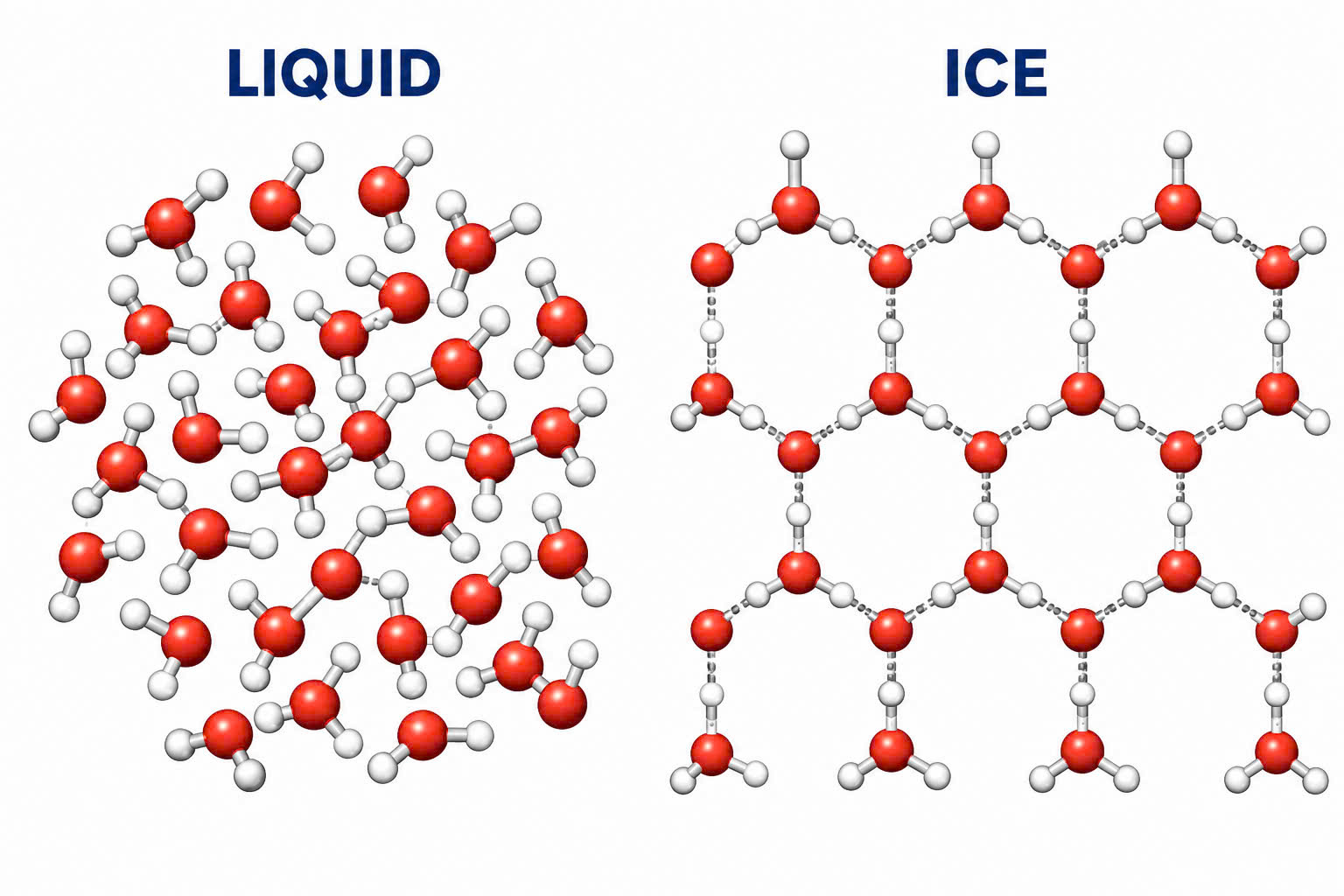
Therefore, the goal is not simply to reduce the amount of water, but to keep water properly bound within the Gelato structure and minimize the amount of free water that can crystallize into ice.
Fat plays an important role in giving Gelato its characteristic texture and mouthfeel. It helps Gelato:
Become smoother and creamier.
Deliver a balanced richness.
Carry and prolong flavors.
Create a slow, silky melt in the mouth.
However, Italian Gelato does not aim for the high fat content typically found in traditional ice cream.
If the fat content is too high:
Gelato can feel overly rich or heavy.
It may mask delicate fruit, nut, or other flavors.
If the fat content is too low:
Gelato may lack smoothness and body.
It can melt too quickly and become more difficult to maintain its shape.
The key is therefore to find the right fat balance for each flavor, rather than simply increasing or reducing the fat content.
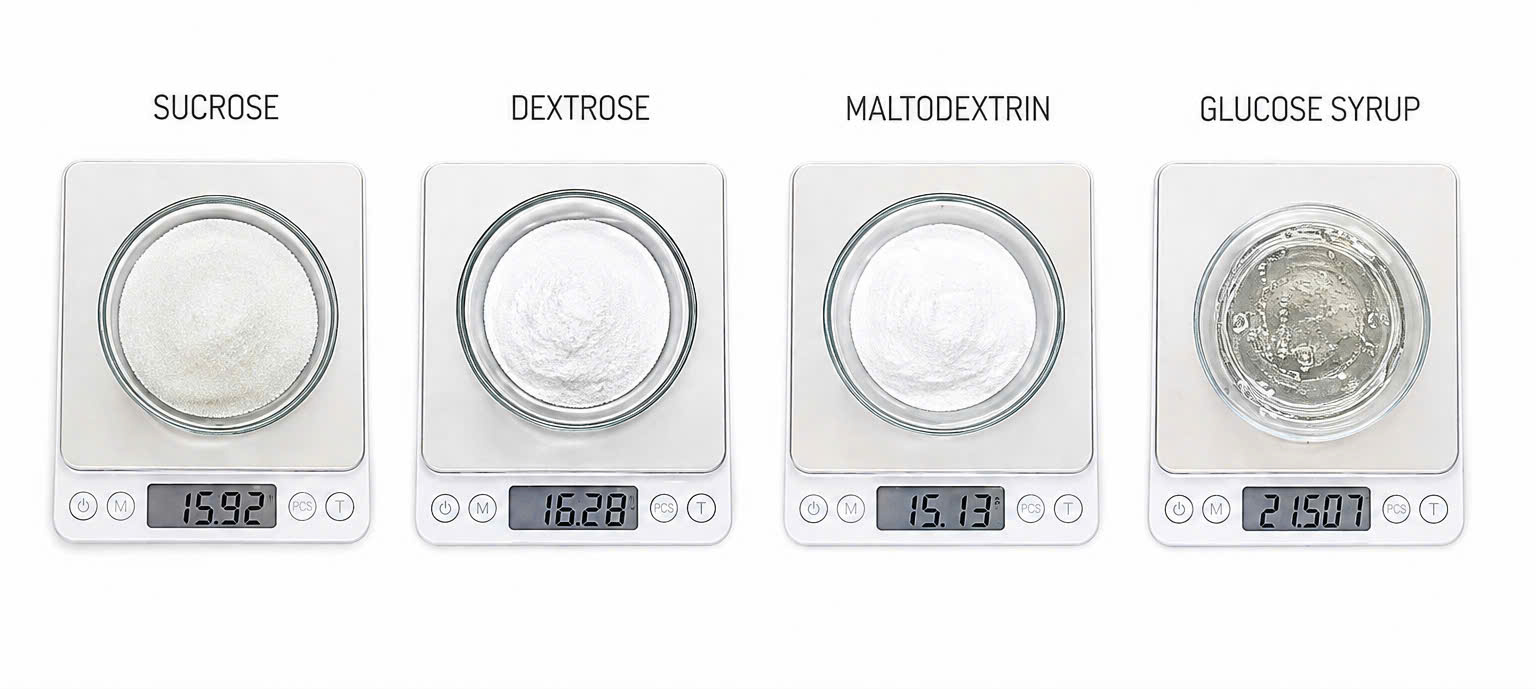
A common mistake is to think that sugar only determines sweetness.
In reality, sugar also plays several important roles in Gelato:
Lowers the freezing point.
Controls softness.
Helps prevent excessive hardening.
Contributes to the overall texture and structure.
That is why professional Gelato recipes often combine different types of sugars, such as:
Sucrose
Dextrose
Glucose Syrup
Invert Sugar
Each type of sugar has a different PAC (Anti-Freezing Power) and POD (Sweetness Power). Therefore, using the right combination and proportions can help Gelato achieve the ideal softness and texture without becoming overly sweet.
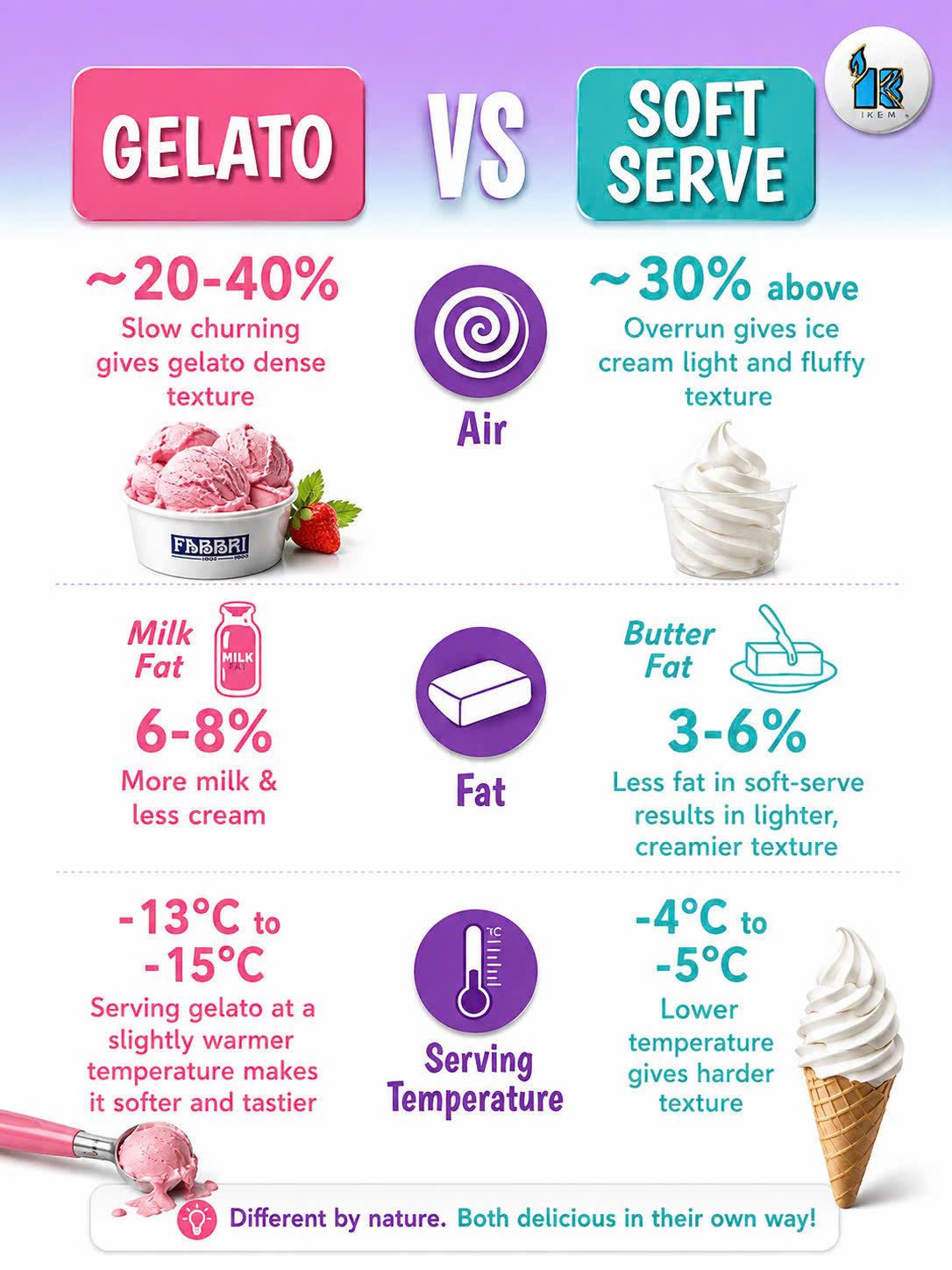
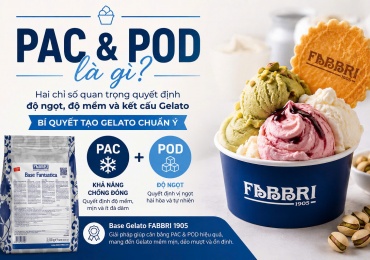
PAC and POD are essentially the “language” of Gelato recipe balancing.
If POD is too low:
Gelato may taste bland.
The flavor can lack depth and intensity.
If POD is too high:
Gelato can become excessively sweet.
The sweetness may overpower the natural flavors of the ingredients.
If PAC is too low:
Gelato becomes too hard.
It can be difficult to scoop.
If PAC is too high:
Gelato becomes overly soft.
It may melt too quickly.
The structure can become unstable.
A well-balanced Gelato recipe must carefully balance both PAC and POD to achieve a stable texture, ideal softness, and harmonious sweetness.
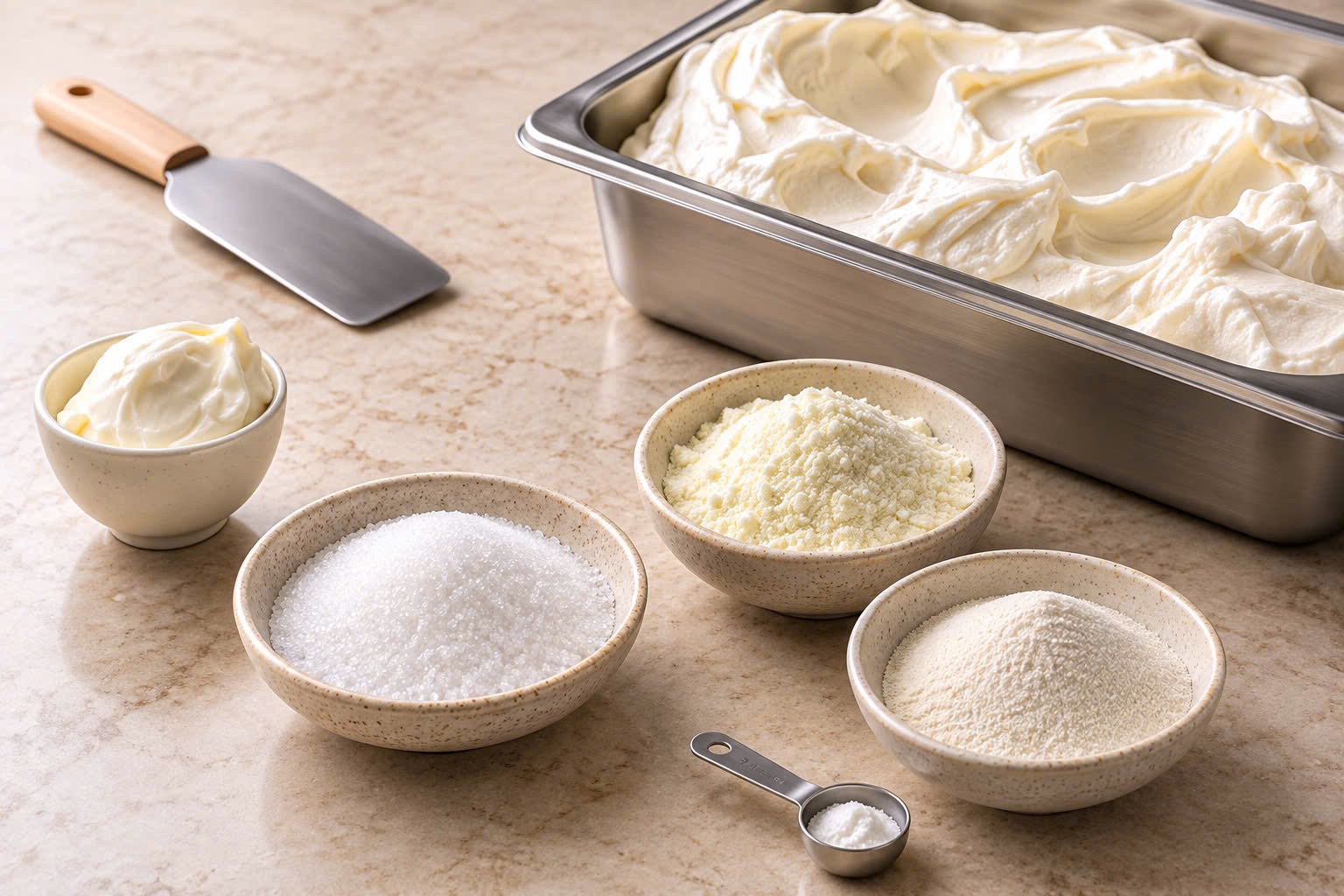
Total Solids are one of the key factors that provide the structural framework of Gelato.
When the total solids content is properly balanced, Gelato can achieve:
A smooth and elastic texture.
A creamy mouthfeel.
Fewer ice crystals.
Better air retention.
Reduced risk of water separation.
Total solids also play an important role in creating the rich, full-bodied mouthfeel that makes Gelato satisfying and flavorful.
A professional Gelato artisan must calculate much more than just:
Water content.
Fat content.
Protein content.
Sugar content.
Total solids.
PAC.
POD.
They also need to take into account:
The natural sugar content of fruits.
The fat content of different types of milk and dairy products.
The solids content of milk powder.
The water-binding capacity of stabilizers.
Storage temperature.
Display and serving conditions.
Changing just one ingredient can affect the entire balance of the recipe, meaning that other components may need to be recalculated accordingly.
This is why many newly opened Gelato shops struggle to maintain consistent quality from one batch to another.
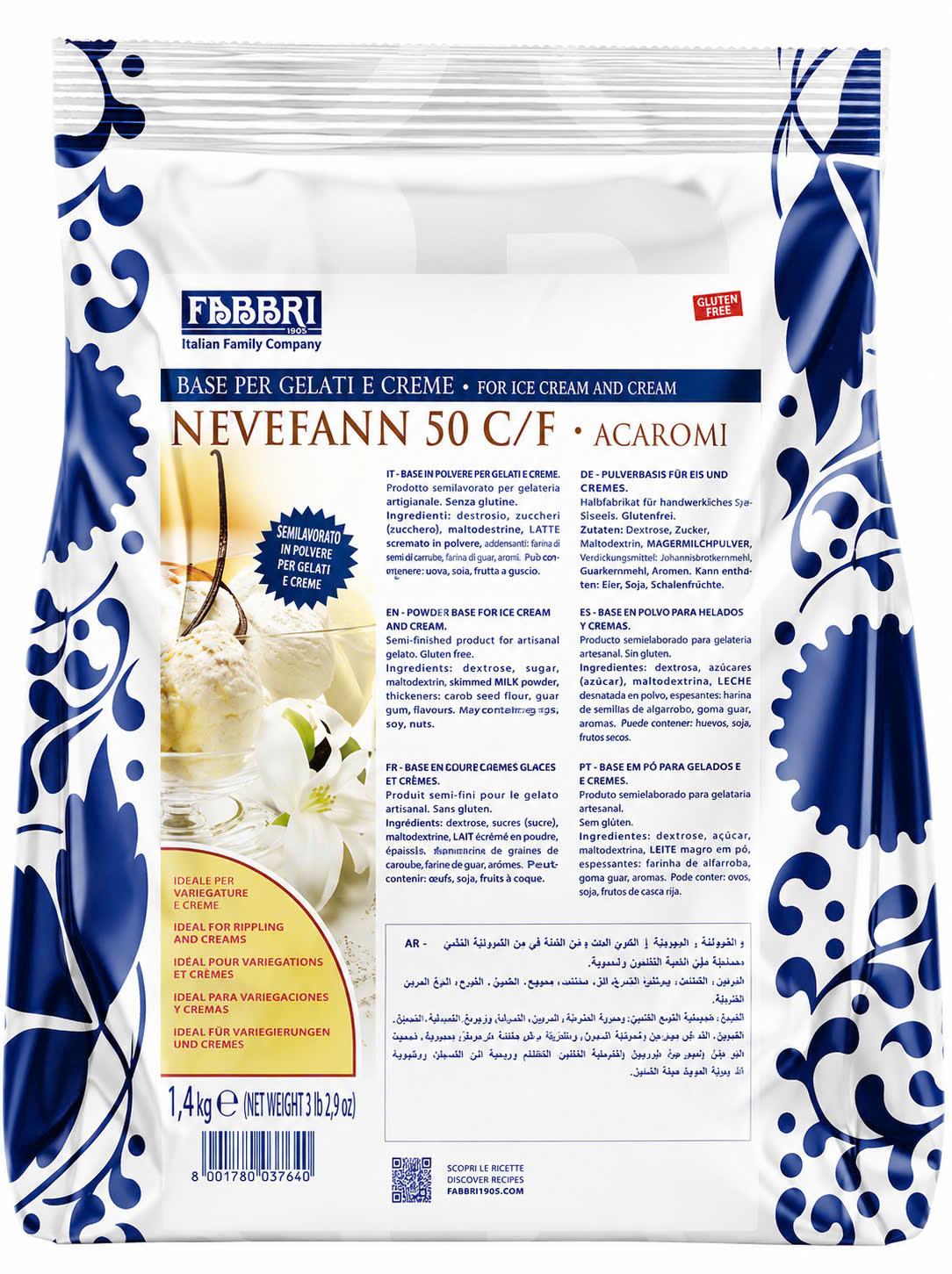
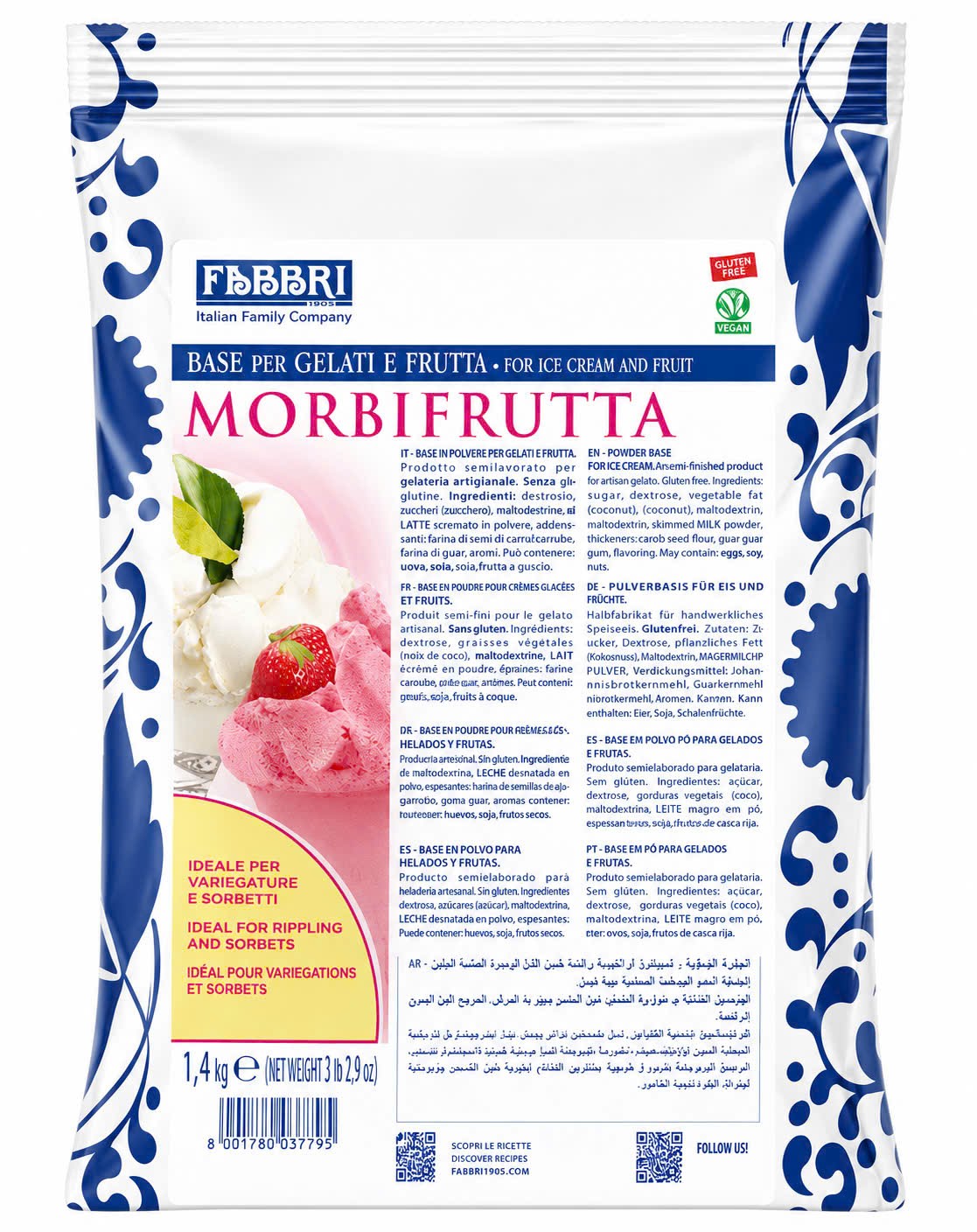
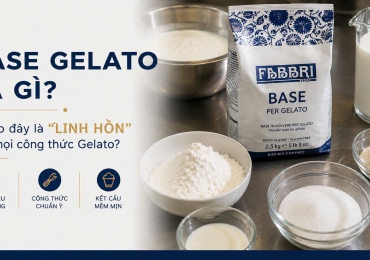
With more than 120 years of experience in the Gelato industry, FABBRI 1905 has developed a range of Gelato Bases designed to significantly simplify the process of creating and balancing Gelato recipes.
FABBRI's Gelato Bases are carefully formulated to optimize:
Stabilizers
Emulsifiers
Total solids
Water-binding capacity
Structure and smoothness
As a result, Gelato makers can focus more on developing unique and delicious flavors, while the structural foundation of the Gelato is optimized according to the expertise and standards of Italian specialists.
Consistent quality from batch to batch.
Significantly reduced risk of ice crystal formation.
Less time required for recipe balancing and adjustments.
Easy to develop and expand a menu with a wide variety of flavors.
Suitable for both newly established Gelato shops and professional production facilities.
Making Gelato is not simply about following a recipe. It is about understanding the role of each ingredient and how they interact with one another.
At IKEM, we not only provide authentic FABBRI 1905 ingredients, but also support our students and business partners with:
Gelato recipe analysis and balancing
PAC, POD, and other technical calculations
Consultation on selecting the right Gelato Base for each product line
Customized recipe development based on specific business needs
Guidance on production operations and cost optimization
Whether you are just starting your Gelato journey or already have professional experience, the IKEM team is always ready to support you in creating authentic Italian-style Gelato with consistent quality and long-term business efficiency.
Great Gelato is not the result of luck. It comes from a scientifically balanced recipe.
By understanding the roles of water, fat, sugars, total solids, PAC, POD, stabilizers, and emulsifiers, you can take control of the formulation process and consistently create Gelato with a smooth and elastic texture, harmonious flavor, and optimal storage stability.
If you want to shorten your development time, reduce production risks, and achieve consistent quality from batch to batch, FABBRI 1905 Gelato Bases provide a reliable foundation for your Gelato recipes.
Combined with the professional consultation and training provided by IKEM, you will have the knowledge, ingredients, and technical solutions needed to develop authentic Italian-style Gelato and satisfy even the most discerning customers.
19.09.2026
29.08.2026
28.08.2026
26.08.2026
24.08.2026
21.08.2026
18.08.2026
15.08.2026
13.08.2026
10.08.2026
10.08.2026

07.08.2026
06.08.2026
06.08.2026
05.08.2026
05.08.2026
01.08.2026

31.07.2026
01.07.2026
27.08.2026