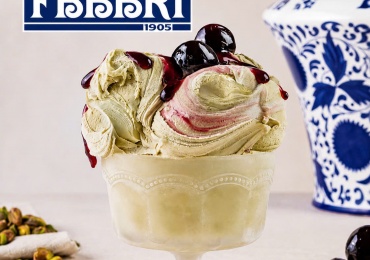
Have you ever wondered why authentic Italian Gelato is always smooth, creamy, easy to scoop, and able to hold its shape beautifully, while many other frozen desserts become either rock-hard or melt too quickly?
The secret lies not only in the batch freezer or the recipe but also in a critical scientific factor: the freezing point.
Understanding the freezing point is fundamental for anyone involved in professional Gelato production. Even a slight miscalculation can dramatically affect the final product, causing coarse ice crystals, an overly soft texture, or the loss of Gelato's signature smooth consistency—all of which directly impact the customer experience.
In this article, IKEM explains how the freezing point influences Gelato and how FABBRI 1905 Gelato Bases help create authentic Italian-style Gelato that is consistent, easy to produce, and delivers outstanding quality in every batch.
The freezing point is the temperature at which the water contained in a Gelato mix begins to change from a liquid into a solid (ice).
Unlike pure water, which freezes at 0°C (32°F), a Gelato mix contains a variety of dissolved ingredients, including:
These dissolved components lower the freezing point of the mixture, meaning that Gelato begins to freeze at temperatures well below those of pure water. During the freezing process, the freezing point of Gelato typically falls within a range of approximately –2°C to –6°C (28°F to 21°F), depending on the recipe.
Finished Gelato is generally stored at temperatures between –12°C and –18°C (10°F to 0°F).
This means that even when Gelato appears fully frozen, a portion of the water remains unfrozen. This unfrozen water is one of the key reasons authentic Italian Gelato maintains its signature soft, creamy texture instead of becoming completely solid.
Mục lục
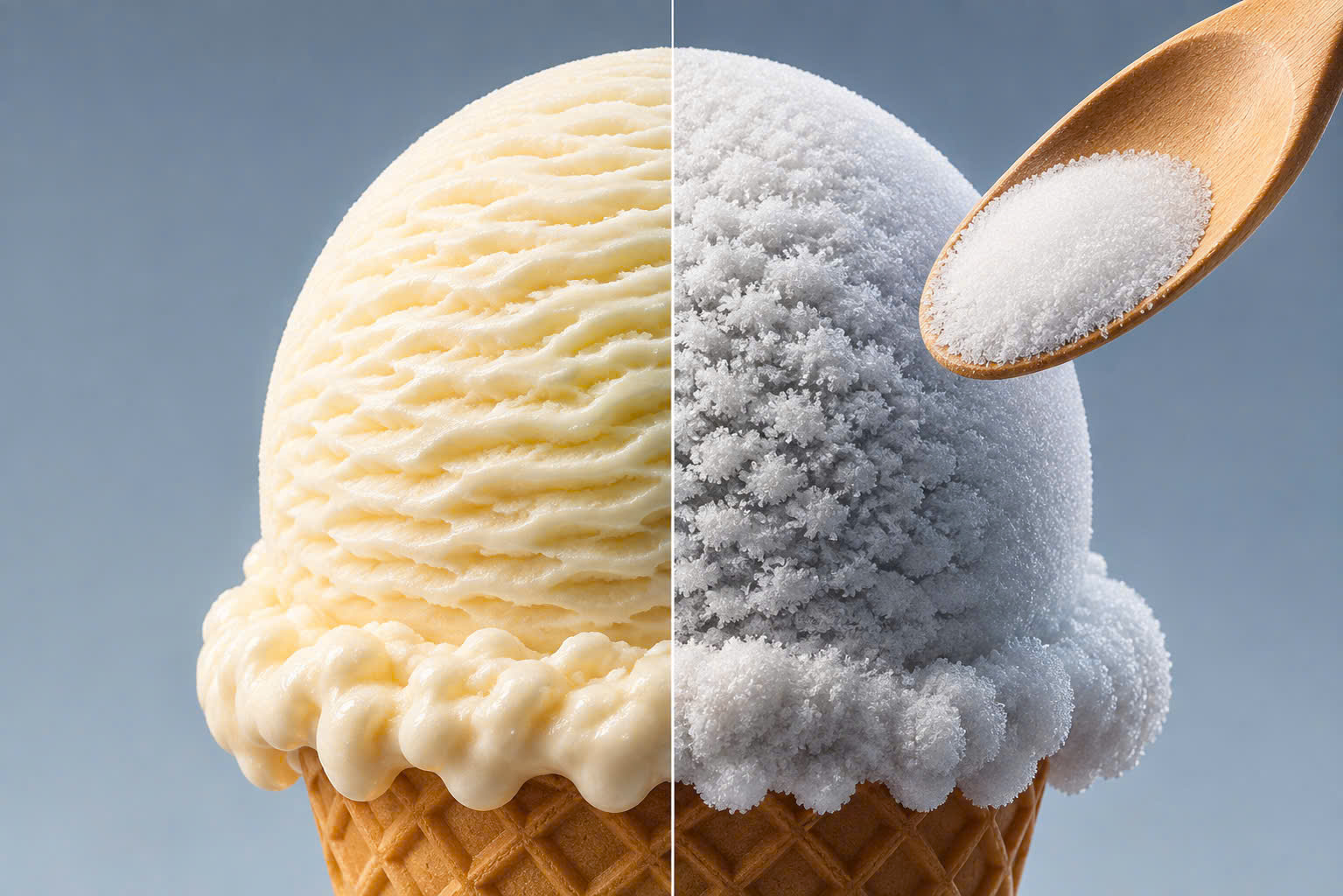
This is one of the most important principles in Gelato production.
Within every batch of Gelato, there are always two forms of water:
As the temperature decreases:
This balance allows Gelato to remain:
If all of the water were to freeze completely:
Maintaining the correct proportion of frozen and unfrozen water is therefore essential for authentic Italian Gelato.
If the recipe is considered the heart of Gelato, then the freezing point determines how the finished product feels when it is served and enjoyed.
A properly balanced freezing point helps Gelato:
Conversely, even a small imbalance in the freezing point can significantly reduce the quality of the finished Gelato.
Sugar is one of the most influential factors affecting the freezing point of Gelato.
When sugar is dissolved in water, it lowers the freezing point of the mixture—a phenomenon known as freezing point depression. The type and amount of sugar used therefore have a direct impact on Gelato's softness, scoopability, and overall texture.
For this reason, professional Gelato makers carefully select and balance different sugars to achieve the desired freezing point while maintaining the ideal sweetness and texture.
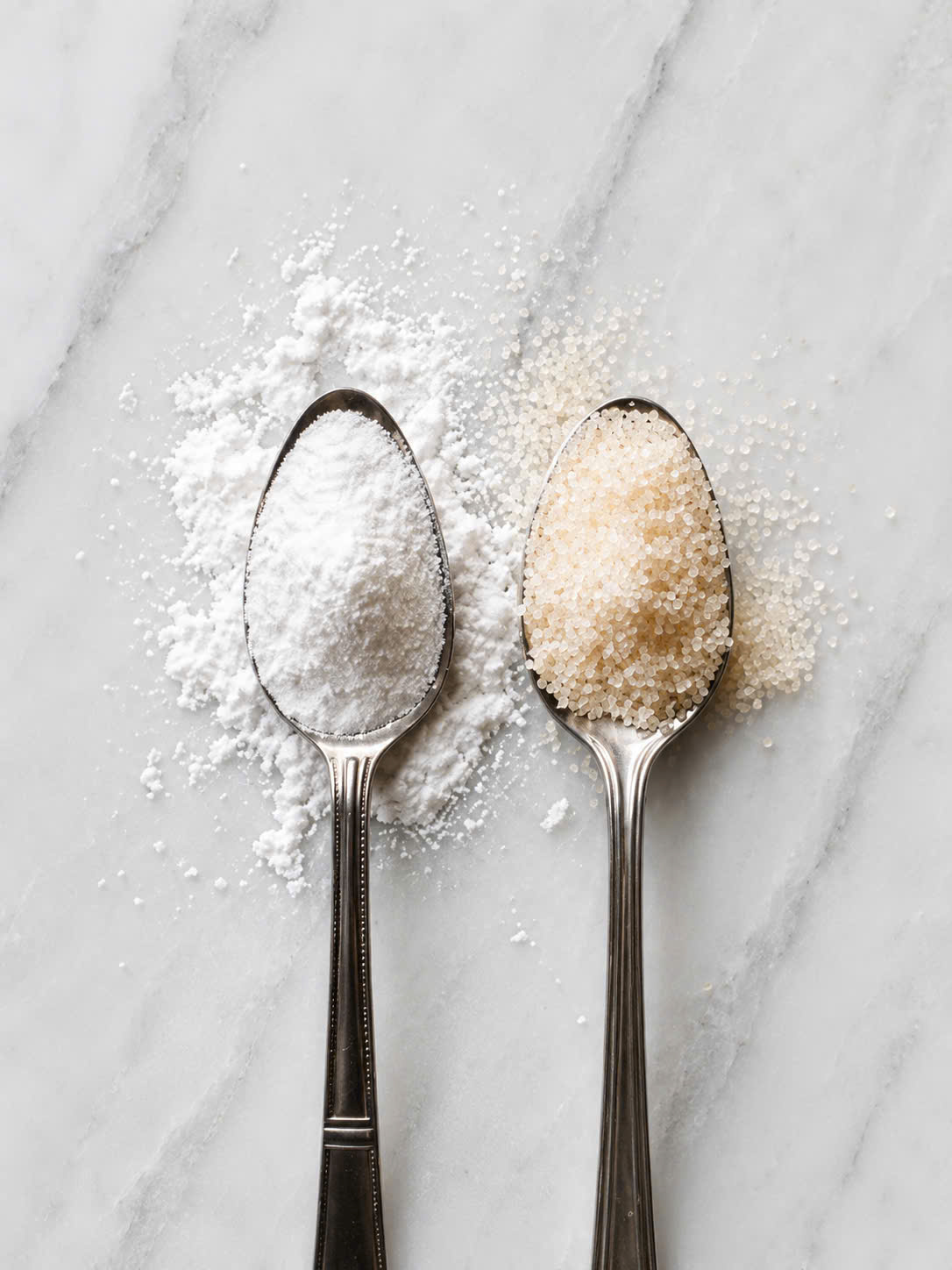 Sugar is the single most influential factor affecting the freezing point of Gelato.
In general:
However, excessive sugar can cause several problems:
For example:
This is why professional Gelato makers cannot simply reduce the sugar content without rebalancing the entire recipe.
Instead of relying on a single sweetener, professional Gelato formulations typically combine several different sugars, including:
Each sugar contributes differently to freezing point depression.
| Sugar Type | Freezing Point Depression Capacity |
|---|---|
| Sucrose | Moderate |
| Dextrose | High |
| Fructose | Very High |
| Glucose Syrup | Moderate |
| Invert Sugar | High |
For this reason, experienced Gelato artisans carefully blend different sugars to achieve the desired softness while maintaining the proper level of sweetness.
PAC (Potere Anti Congelante) is the index that measures the freezing point depression power of each sugar or ingredient.
The higher the PAC value:
This is why professional Gelato formulation requires balancing both PAC and POD (Sweetening Power) rather than considering sweetness alone.
Although fat does not directly lower the freezing point, it plays an important role in improving the eating quality of Gelato by:
Common sources of fat include:
Milk proteins, lactose, and other solids contribute to Gelato quality by:
Stabilizers are highly effective at binding free water within the Gelato mix.
As a result, they help to:
Emulsifiers contribute by:
Although emulsifiers have only a limited direct effect on the freezing point itself, they play a vital role in maintaining a stable structure throughout storage and display.
An improperly balanced freezing point can significantly reduce the quality of Gelato.
A freezing point that is too high causes excessive water to freeze into ice, leading to a product that is harder, less creamy, and more difficult to scoop. It also increases the likelihood of large ice crystal formation, resulting in a coarse texture and a less enjoyable eating experience.
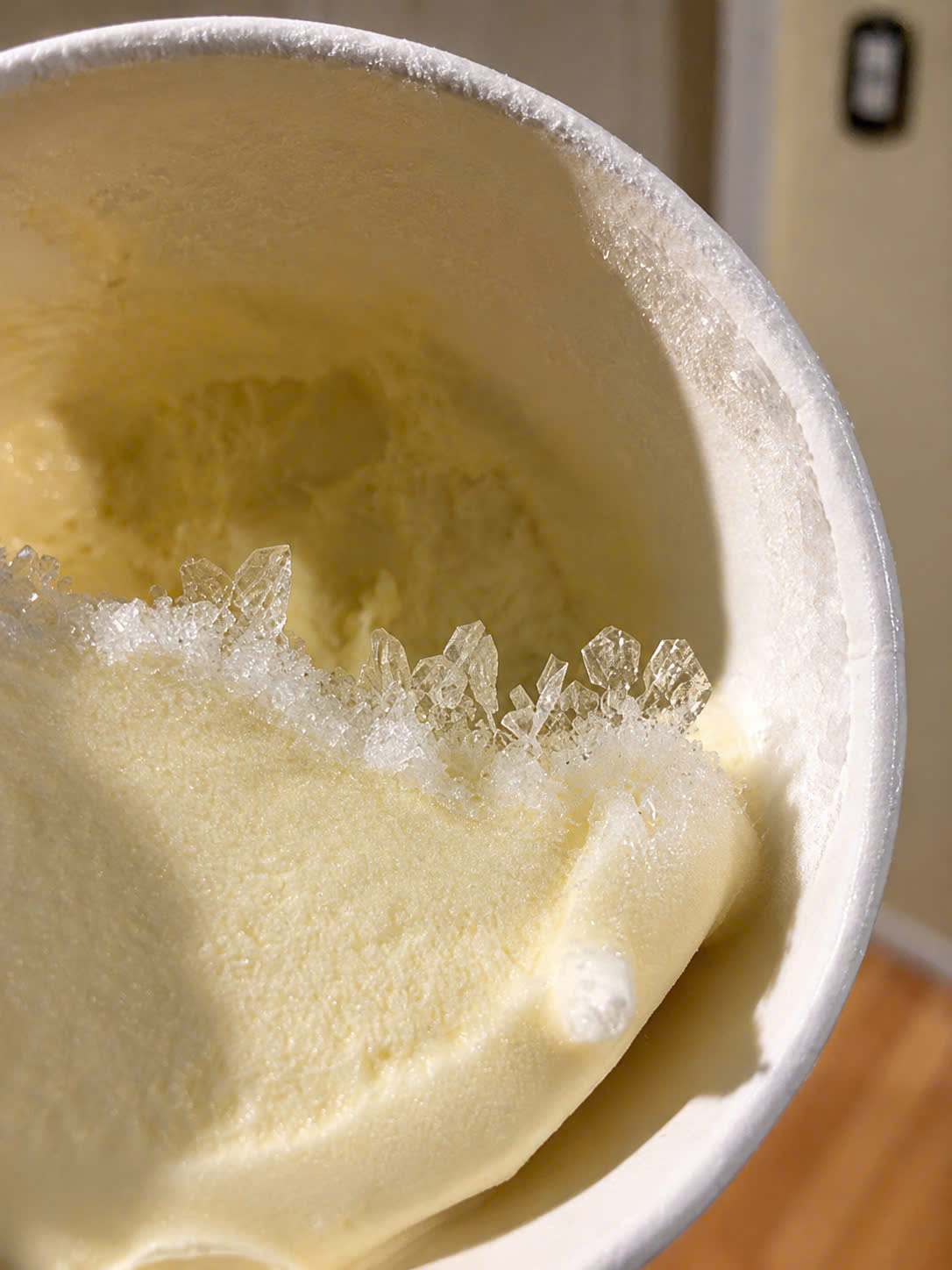
When the freezing point is too high, Gelato typically exhibits the following characteristics:
These factors cause too much water to freeze into ice, resulting in a product that loses the smooth, creamy texture expected of authentic Italian Gelato.
On the other hand, a freezing point that is too low can also negatively affect Gelato quality.
Typical symptoms include:
Professional Gelato formulation therefore aims not to maximize or minimize the freezing point, but to achieve the optimal balance between frozen and unfrozen water. This balance is what gives authentic Italian Gelato its characteristic smooth texture, excellent scoopability, slow melting, and consistent performance during storage and display.
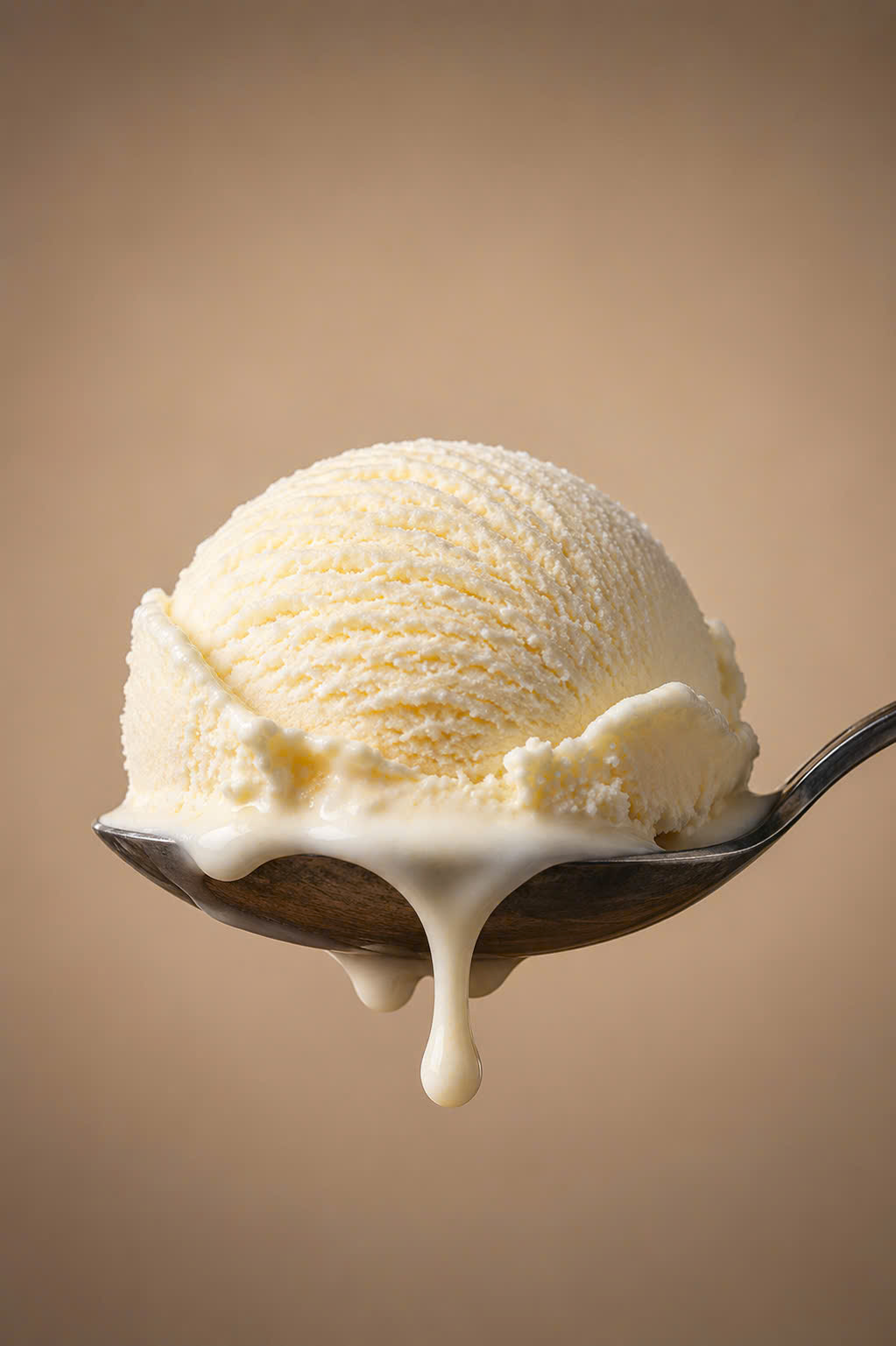
When the freezing point is too low, Gelato may exhibit the following characteristics:
A freezing point that is too low leaves too much water in the unfrozen state, causing the Gelato to lose structural stability and making it difficult to maintain its ideal serving characteristics.
Proper temperature management is just as important as recipe formulation for maintaining Gelato quality.
Typical temperatures used throughout the production process are:
| Production Stage | Typical Temperature |
|---|---|
| Batch Freezing | –6°C to –9°C |
| Blast Freezing | –30°C to –40°C |
| Frozen Storage | –18°C to –20°C |
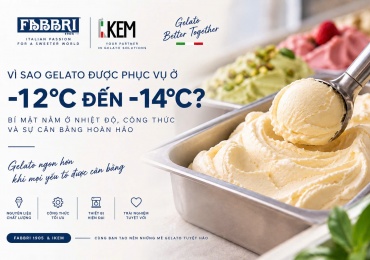
| Display Cabinet | –12°C to –14°C |
When the recipe is formulated with the correct freezing point, Gelato will consistently maintain:
Achieving the ideal freezing point is far more complex than simply adjusting the sugar content. It requires a precise balance between sugars, milk solids, fats, stabilizers, emulsifiers, and other functional ingredients.
FABBRI 1905 Gelato Bases are scientifically formulated to simplify this process, providing a carefully balanced system that helps Gelato makers achieve consistent freezing point control without the need for complex ingredient calculations.
Each FABBRI 1905 Base is developed to support:
By combining FABBRI 1905 Gelato Bases with the appropriate recipe and production process, Gelato professionals can reliably produce authentic Italian-style Gelato that is soft, stable, and consistently delivers an exceptional eating experience in every batch.
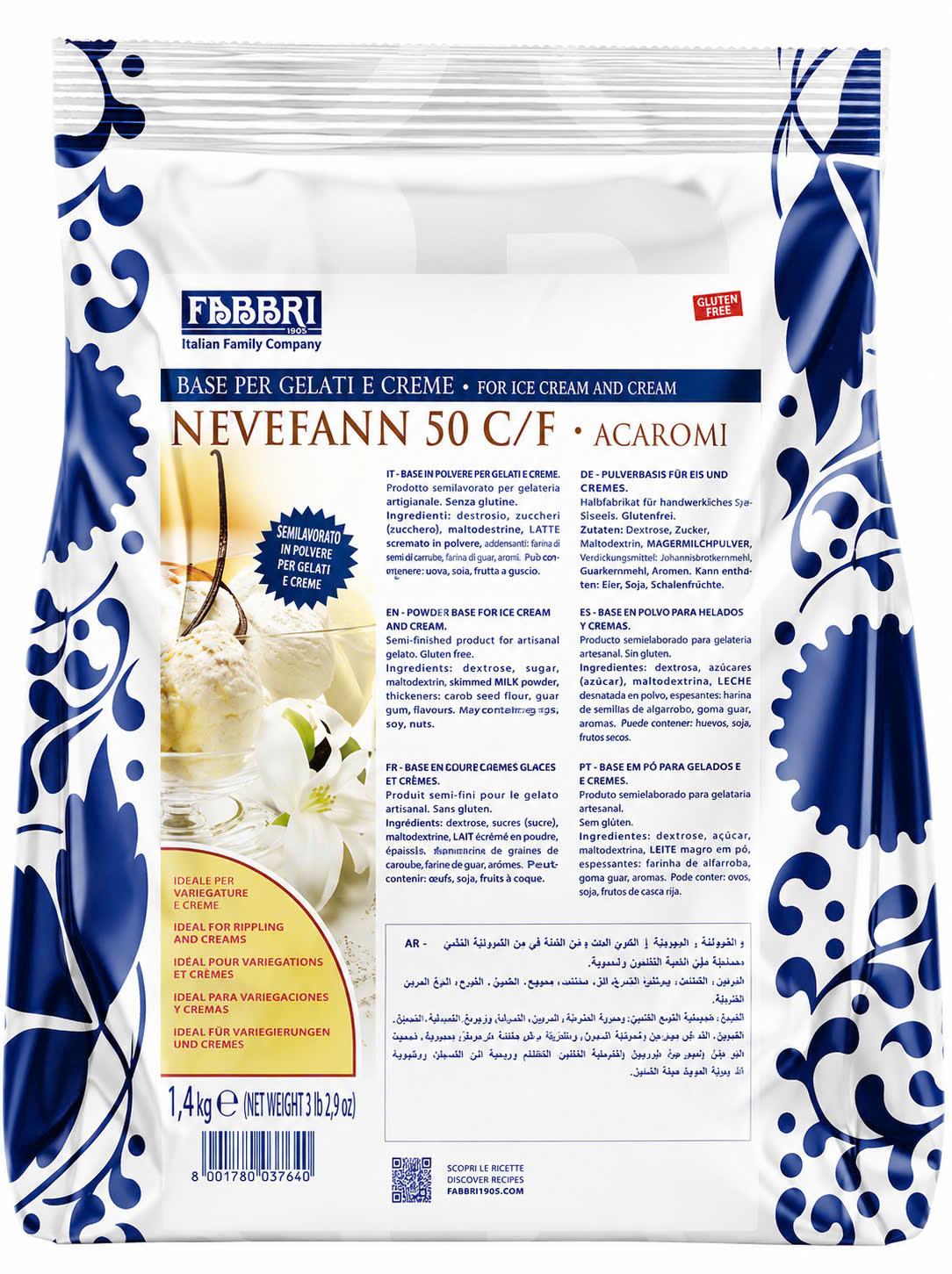
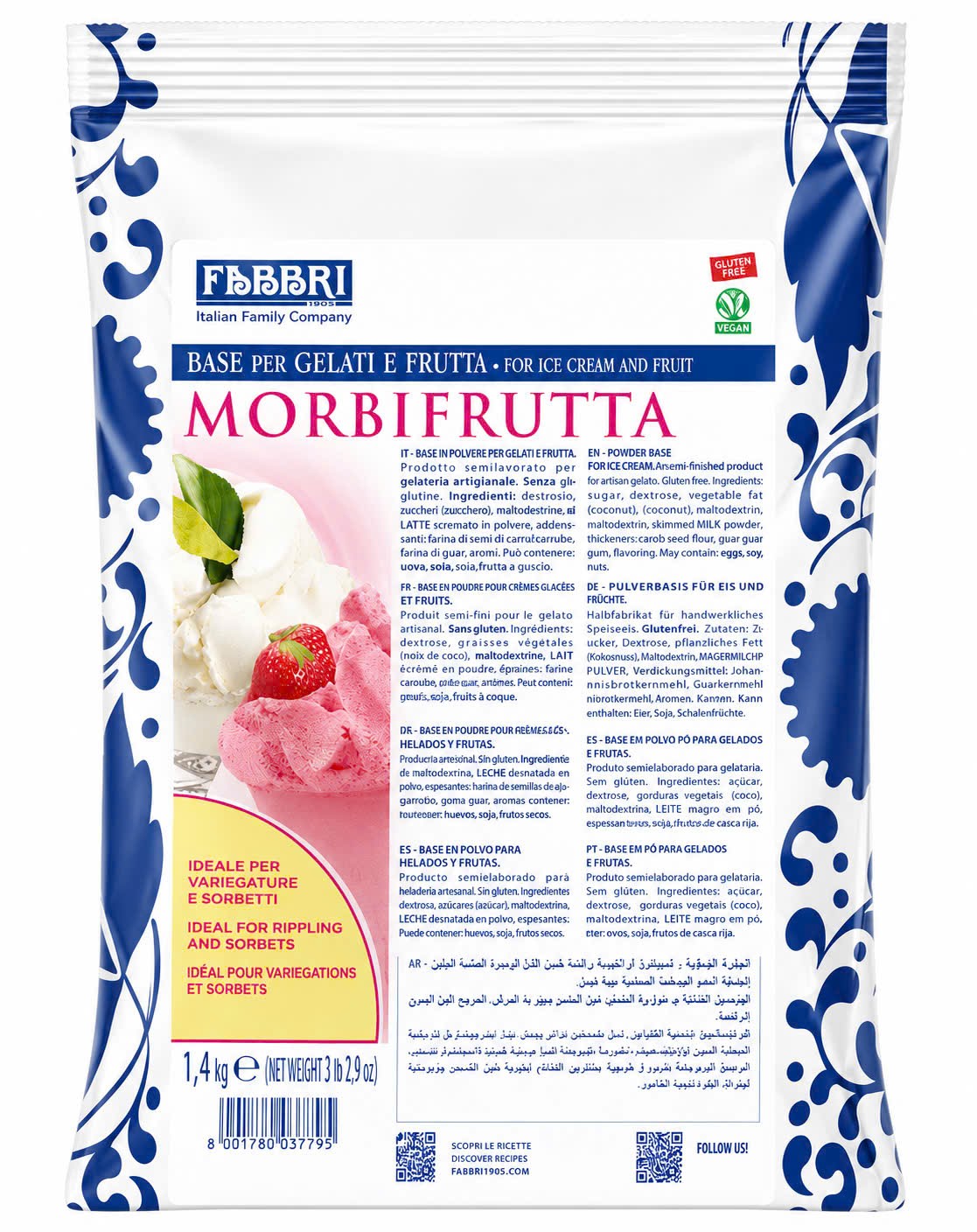
For beginners and businesses seeking consistent product quality, balancing every component of a Gelato recipe can be both complex and time-consuming. This is why many Gelato professionals around the world choose FABBRI 1905 Gelato Bases.
Each FABBRI 1905 Gelato Base is carefully formulated with an optimized balance of:
This integrated formulation enables Gelato makers to:
Whether you are just starting your Gelato journey or operating a professional Gelato shop, FABBRI 1905 Gelato Bases provide a reliable solution for achieving authentic Italian Gelato with consistent quality and performance.
A thorough understanding of key parameters such as Freezing Point, PAC, POD, Overrun, Stabilizers, and Emulsifiers is essential for developing scientifically balanced Gelato recipes and producing consistently high-quality results.
As a specialist in Gelato training and technical consulting, IKEM is committed to supporting Gelato professionals with expert guidance on recipe formulation, production techniques, and ingredient selection. In addition, IKEM supplies genuine FABBRI 1905 Gelato ingredients, helping artisans and businesses create authentic Italian-style Gelato with outstanding consistency, refined flavor, and exceptional texture.
The freezing point is far more than just a technical parameter—it is one of the key factors that determines Gelato's softness, smoothness, shape retention, and overall eating experience.
By carefully balancing sugars, fats, milk solids, stabilizers, and emulsifiers, Gelato makers can effectively control the freezing point and consistently produce authentic Italian-style Gelato with superior texture and quality.
If you want to simplify recipe development without compromising consistency, FABBRI 1905 Gelato Bases offer a proven and dependable solution. Combined with the technical expertise and ongoing support provided by IKEM, you can confidently master the art of authentic Italian Gelato while delivering exceptional quality in every batch.
19.09.2026
29.08.2026
28.08.2026
26.08.2026
24.08.2026
21.08.2026

18.08.2026
15.08.2026

13.08.2026
10.08.2026
10.08.2026
09.08.2026
06.08.2026
06.08.2026
05.08.2026
05.08.2026
01.08.2026

31.07.2026
01.07.2026
27.08.2026